
Chhattisgarh nearing Naxal-free goal; CM Sai attributes success to surrender policy, development drive
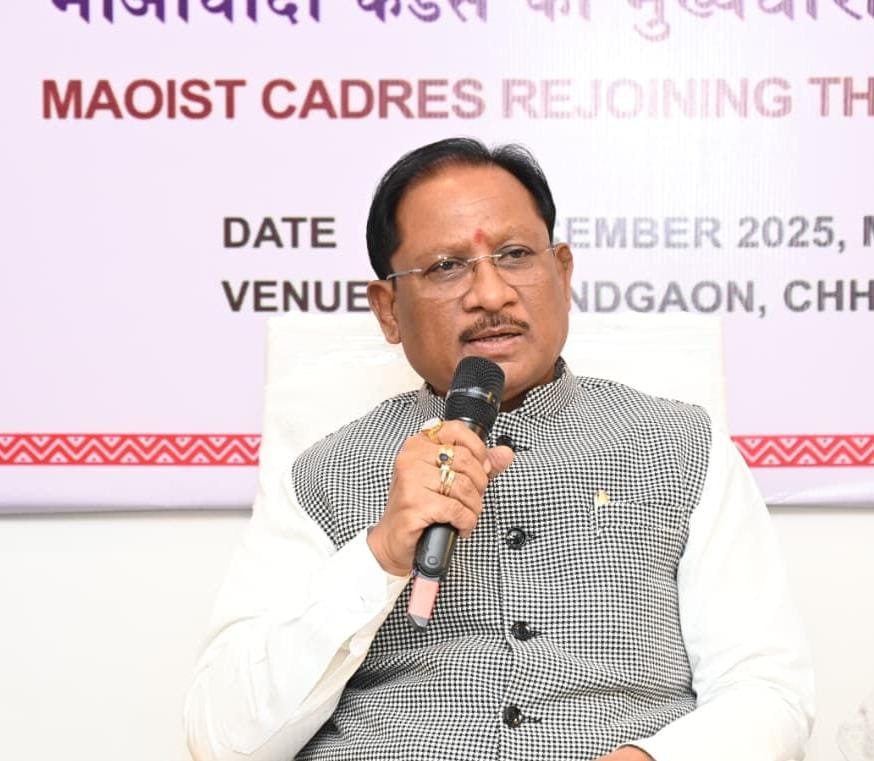
Raipur, Chhattisgarh Chief Minister Vishnu Deo Sai on Monday said the state is moving rapidly towards the national target of completely eliminating Left-Wing Extremism (LWE) by March 31, 2026. Addressing a press conference in Rajnandgaon, the Chief Minister asserted that the last two years of his government have marked a decisive turning point in the fight against Naxalism, highlighting the unprecedented success achieved by security forces.
During this period, more than 500 Maoists have been neutralised in encounters, and over 4,000 Naxalites have either surrendered or been arrested. This indicates a steep decline in extremist influence, particularly across the Bastar region. The Chief Minister outlined the government’s dual strategy of aggressive security operations and robust rehabilitation.
A new policy has been implemented to encourage militants to return to the mainstream. Under this policy, 15,000 houses have been approved for surrendered Naxalites under the Pradhan Mantri Awas Yojana (PMAY). They are also being provided monthly financial assistance of ₹10,000 for three years, along with skill development training and employment support. CM Sai stated that the visible shift “from the language of guns to the language of development” is now evident in remote tribal belts, citing initiatives such as the Pandum Cafe as symbols of social change.
The rapid establishment of security camps and increased administrative reach have facilitated the resettlement of more than 400 villages. Through the Niyyad Nella Naar scheme, essential services such as roads, electricity, drinking water, healthcare, and education are now being extended to previously inaccessible areas. Many villages have witnessed school reopenings, regular flag hoisting, and active participation in elections after years of disruption.
Highlighting Bastar’s development potential, CM Sai said the region is emerging as a centre for agriculture-based industries, forest produce processing, animal husbandry, and rural entrepreneurship. He added that the Industrial Policy 2024–30 provides special incentives for Naxal-affected areas, connecting local youth with sustainable livelihood opportunities.
On tourism, the Chief Minister said granting industry status to the sector has placed Bastar on the global map. He cited the growing popularity of the Kutumsar Caves, regional waterfalls, Abujhmad forests, and tribal cultural heritage. He added that the expanding home-stay model is strengthening rural incomes and boosting local employment.
The Chief Minister asserted that the progress achieved is a tribute to the sacrifice of fallen security personnel and the resilience of the people. He expressed confidence that, in line with the national resolve, Bastar will soon be fully integrated into the mainstream of development.