
Bastar 2.0: CM Vishnu Deo Sai presents mega development blueprint to PM Modi
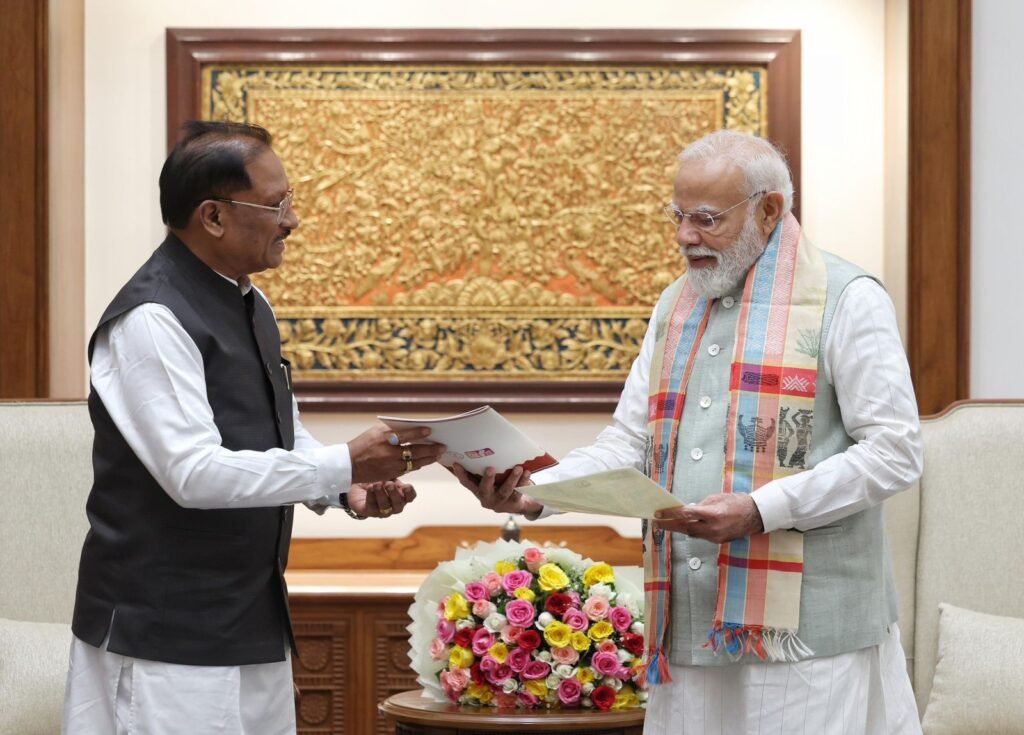
New Delhi, April 07: Chhattisgarh Chief Minister Vishnu Deo Sai met Prime Minister Narendra Modi in the national capital on Tuesday and presented a comprehensive ‘Bastar 2.0’ blueprint. The roadmap aims to transform the erstwhile Naxal-hit region into a major hub for tourism, startups, and innovation.
During the meeting, the Chief Minister invited the Prime Minister to visit Bastar after the monsoon to inaugurate several key projects and lay foundation stones for new initiatives. Sai informed the Prime Minister that the restoration of peace following the decline of Naxalism has paved the way for a 360-degree development approach in the region.
The transformation plan is built on a five-pillar strategy: saturation, connectivity, facilitation, empowerment, and engagement. It proposes the construction of 228 new roads and 267 bridges to integrate remote tribal villages into the mainstream. The state has also sought special central assistance for 61 additional infrastructure projects.
A significant focus of the blueprint is the economic upliftment of local families. The state government has set a target to double the monthly household income of 85 per cent of families from ₹15,000 to ₹30,000 by 2029. To achieve this, the ‘Niyad Nella Naar 2.0’ scheme is being expanded to include Gariaband, Mohla-Manpur-Ambagarh Chowki, and Khairagarh-Chhuikhadan-Gandai districts.
In the education and health sectors, 45 ‘Pota Cabin’ schools will be converted into permanent structures. Plans are also afoot to establish new ‘Education Cities’ in Jagargunda and Orchha, alongside super-speciality hospitals and medical colleges in Dantewada.
To foster entrepreneurship, the Chief Minister highlighted a new startup policy under the ‘Anjor Vision 2047’ framework, targeting 5,000 startups by 2030. He also shared progress on the ‘Bastar Munne’ initiative, which ensures on-the-spot delivery of government services and grievance redressal through village-level camps.
Major projects proposed for the Prime Minister’s upcoming visit include the Raoghat-Jagdalpur railway line, the expansion of Jagdalpur airport, and the inauguration of new irrigation facilities at Deurgaon and Matnar on the Indravati river, which are expected to benefit over 31,800 hectares of farmland.