
Bastar now Naxal-free, says Amit Shah as he slams previous Congress govt for delaying goal
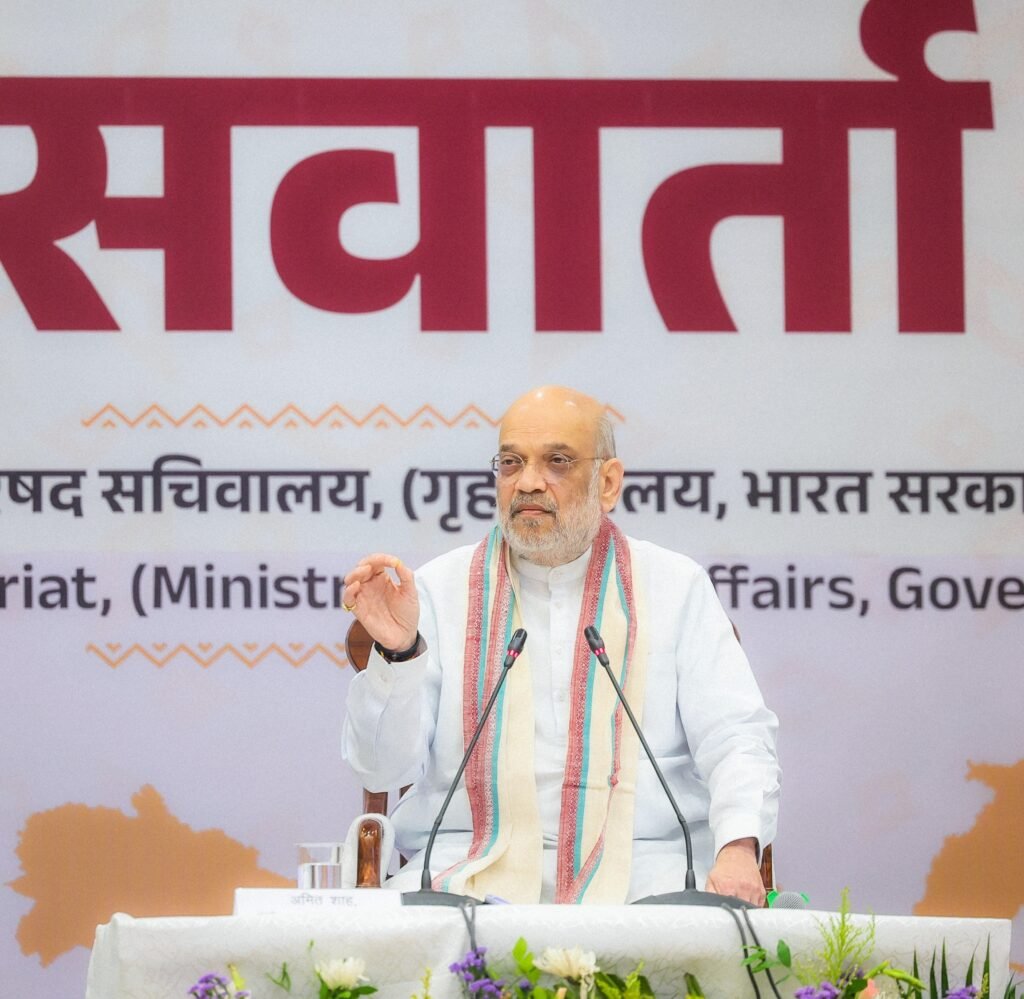
Jagadalpur, May 19: Union Home Minister Amit Shah on Tuesday declared that Bastar has emerged completely free from Naxalism and announced a comprehensive development roadmap for the region, stating that a new era of peace and progress has begun in the tribal belt of Chhattisgarh.
Chairing the 26th Central Zonal Council meeting here, the Union Home Minister addressed a press conference later and said that the atmosphere of fear and life under the shadow of guns had ended in Bastar, adding that the region was now “breathing freely.”
Describing 19 May 2026 as a historic day, Amit Shah linked the achievement to a series of key developments beginning with the formation of the BJP government in Chhattisgarh under Chief Minister Vishnu Deo Sai on 13 December 2023.
The Union Home Minister pointed out that despite support from many non-BJP ruled states in anti-Naxal operations, the previous Congress government in Chhattisgarh had failed to cooperate adequately with the Centre in efforts to eliminate Left-wing extremism. He asserted that the renewed push against Naxalism picked up momentum only after the BJP assumed office in the state.
Recalling a high-level meeting with Directors General of Police of affected states on 24 August 2024, Amit Shah noted that the government had set a firm target to eliminate Naxal violence from the country by 31 March 2026. He credited security forces and their supreme sacrifices for achieving that historic goal ahead of schedule.
Amit Shah rejected the long-standing argument that underdevelopment fueled Naxalism. He clarified that Naxalism itself had blocked development in Bastar and other affected regions for decades, while other backward areas of the country progressed peacefully.
Highlighting the government’s new development model, the Union Home Minister announced the expansion of the “Veer Shaheed Gundadhur Sewa Dera” initiative. He explained that 70 out of roughly 200 security camps established earlier by the Government of India would now be converted into integrated service and development centres to deliver public utilities directly to villagers.
These Sewa Deras will provide banking services, identity documentation facilities, digital services through Common Service Centres, ration distribution, health facilities, Anganwadis, skill development programmes, and employment support under one roof.
The Union Home Minister said these centres would also become hubs for economic activities and women’s empowerment. He announced plans to strengthen cooperative dairy networks in tribal areas, adding that tribal women would be provided one cow and one buffalo each to boost livelihood opportunities.
The Chhattisgarh government has signed an agreement with the National Dairy Development Board (NDDB), and Deputy Chief Minister Arun Sao recently visited Gujarat to study the cooperative dairy model to help build a large dairy network in the coming months.
Amit Shah noted that Bastar residents had long remained deprived of basic benefits such as ration cards, free foodgrains, health insurance, electricity, water supply, schools, and minimum support price (MSP) for paddy due to Naxal violence. The new development initiatives aim to ensure 100 per cent saturation of government welfare schemes in every village.
Listing infrastructure works carried out under Prime Minister Narendra Modi, the Union Home Minister stated that over 12,000 km of roads had been constructed in Naxal-affected regions at a cost exceeding ₹20,000 crore. Additionally, thousands of mobile towers, bank branches, ATMs, post offices, Eklavya Model Schools, ITIs, and skill development centres have been established.
He also highlighted cultural and sports initiatives like the Bastar Pandum and Bastar Olympics, which saw active participation from tribal communities and surrendered former Naxals.
The Government of India has prepared a scientific roadmap for the long-term development of Naxal-free regions, focusing on security, infrastructure, women and youth empowerment, and the preservation of tribal culture.
In his concluding remarks, the Union Home Minister urged the people of Bastar to live without fear, assuring them that both the Central and Chhattisgarh governments are committed to making Bastar the most developed tribal division in the country.
Warning residents against elements attempting to revive extremist ideologies under new identities, he urged them to remember the decades of violence and destruction caused by Naxalism.
Amit Shah paid rich tributes to the security personnel and civilians who laid down their lives in the fight against Naxalism, stating that the end of violence in Bastar marks the beginning of a historic chapter of development and peace.