
SC says right to protest cannot mean indefinite occupation of designated sites
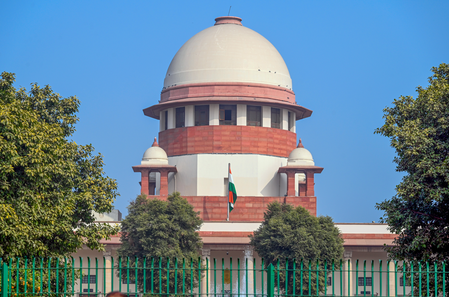
New Delhi: The Supreme Court on Tuesday observed that the right to protest cannot be exercised by occupying a designated protest site indefinitely, emphasizing that public places must be allotted for specified periods to ensure other groups can also exercise their constitutional rights.
A Bench comprising Chief Justice of India Surya Kant, Justice Joymalya Bagchi, and Justice V. Mohana made the oral observation while hearing a batch of petitions arising from the October protests in New Delhi against Chief Election Commissioner Gyanesh Kumar.
Refusing to accept the continuous occupation of public grounds, the apex court remarked that no single organisation could claim exclusive rights over a public space merely by arriving first, as other groups, including farmers, workers, trade unions, and the homeless, also have a constitutional right to assemble.
The CJI-led Bench highlighted the need to strike a balance between the right to protest and the right of citizens to carry on trade and earn a livelihood, particularly keeping in view the daily-wage earners, street vendors, and small shopkeepers whose earnings are severely disrupted when commercial areas are shut due to prolonged demonstrations.
Appearing for the Central Government, Solicitor General Tushar Mehta submitted that permission for the protest by the Cockroach Janta Party (CJP) in July had been granted for only a single day, yet the demonstrators continued to occupy the site for 17 days. He further informed the court that protesters subsequently marched towards Parliament without obtaining requisite authorization, stressing that key constitutional institutions and public places cannot be converted into demonstration sites without clearance.
During the proceedings, the Supreme Court issued notice on a plea filed by the Kirana Committee Delhi seeking a halt to protests during the festive season. However, the bench directed the traders’ association to implead the organizers of the anti-CEC protests as parties to the matter, noting that grievances could not be fully adjudicated in their absence.
The hearing also witnessed arguments on the Delhi Police’s use of facial recognition technology to identify demonstrators. Senior advocate Prashant Bhushan raised privacy concerns over police deploying facial recognition software at protest venues.
Countering the submission, the Solicitor General argued that individuals participating in demonstrations at public places cannot claim the same expectation of privacy as in a private setting. SG Mehta clarified that police do not act solely on facial recognition matches and independently verify an individual’s identity before initiating any action.
Justice Bagchi questioned whether identifying protesters through National Crime Records Bureau (NCRB) data was permissible under the existing legal framework, noting the government’s claim that certain individuals identified had past criminal antecedents.
Senior advocate Hariharan contended that having a criminal record does not strip a citizen of their constitutional right to participate in a peaceful protest—an argument the Solicitor General termed misconceived. Meanwhile, senior advocate Menaka Guruswamy raised concerns regarding the collection and long-term storage of personal data belonging to citizens exercising their right to assemble.